By Antonietta Breitenfeldt, M. Ed. | BrightSpot Labs
The acceptance letters have been read, the texts have been sent, and your student has committed to a path. Whether they are heading to a four-year university, enrolling in a trade program, or planning a gap year, one thing is clear: knowing what to do after the college decision is made is just as important as the decision itself. And while most families focus on the acceptance letter, figuring out what to do after the college decision is where a lot of critical work begins. There is so much to celebrate right now and quite a bit to get in order.
In This Post
- What to Do After the College Decision: Changes at 18
- The “What If” Conversation Every Family Should Have
- What to Do After the College Decision: Documents to Get in Order
- Practical Tips for Families Right Now
- What to Do After the College Decision: There Is Still More Ahead
What to Do After the College Decision: Changes at 18
This is one of those things families rarely think about until it catches them off guard.
Once your student turns 18, or enrolls in any postsecondary institution regardless of age, a federal law called FERPA (the Family Educational Rights and Privacy Act) transfers all rights over educational records from parent to student. Grades, transcripts, financial aid details, and academic standing become your student’s information to share, or not share, as they choose.
According to the U.S. Department of Education, schools are not permitted to release a student’s education records to parents without the student’s written consent, with limited exceptions. One exception: if the student is still claimed as a dependent on your federal tax return. But even then, individual institutions handle this differently, and many still defer to the student.
What this means day-to-day is that even if you are paying tuition, you may not have the automatic right to call the registrar, speak with a financial aid officer on your student’s behalf, or receive grade updates without explicit permission. Many families find this genuinely surprising when they first encounter it. The practical fix is straightforward: encourage your student to complete a FERPA waiver through the school’s student portal before or during orientation. It does not give you control over their academic life. It simply makes it possible for you to be part of conversations when your student wants or needs your involvement. Understanding what to do after the college decision from a privacy standpoint is one of the most overlooked parts of this transition. If financial aid questions are still open, our guide on how to negotiate college financial aid covers what leverage families still have and how to approach those conversations with the aid office directly.
There is also HIPAA to consider. Once your student is a legal adult, their health information becomes private too. If they are treated at a campus clinic, urgent care, or a hospital, medical staff are not legally required to share that information with you, even in an urgent situation.
None of this means your relationship changes. It means the rules and systems you’re navigating do.
The “What If” Conversation Every Family Should Have
No one wants to imagine a worst-case scenario. But families who talk through these situations before their student leaves are the ones who are typically as prepared as can be when something unexpected comes up.
Here are the questions worth sitting with together, before any bags are packed.
What if your student is in a medical emergency and cannot speak for themselves?
Without specific legal documentation in place, parents may not have the automatic right to make medical decisions for their adult child, access their medical records, or even receive basic information from a hospital. In some situations, families have had to pursue legal guardianship through probate court when no document existed, a process that can take weeks and cost thousands of dollars.
A Healthcare Proxy or Medical Power of Attorney designates a trusted person, typically a parent, to make healthcare decisions if the student cannot. It only activates if doctors certify the student is unable to decide for themselves, so it gives parents no day-to-day access or control. Because advance directive requirements vary by state, make sure you are using a form that is valid where your student will be living or attending school.
A separate HIPAA Authorization allows medical providers to share health information with designated people. You can access a HIPAA medical release form here, and the HIPAA Journal breaks down exactly what the form covers and what to look for before signing. In some states, the HIPAA authorization and Healthcare Proxy are combined into one document.
With all forms: sign, notarize if required by your state, and save both hard and electronic copies on your phones and home computers. Doesn’t hurt to have a hard copy with you and your young adult.
What if something comes up with finances or housing?
A Durable Power of Attorney covers financial and legal decisions. If your student is studying abroad, hospitalized, or simply unreachable when something time-sensitive needs to be handled, this document can give a designated person the legal authority to act on their behalf.
These are practical documents that can save you time and headache. The goal is simply to make sure someone who loves and understands your student can show up for them if the moment ever comes.
What to Do After the College Decision: Documents to Get in Order
Encouraging your student to keep the following in a safe, accessible place is one of the most practical things you can do right now. Typically, a FERPA waiver is completed directly through their school if your student wants to grant you ongoing access to their academic records.
- Birth certificate (original or certified copy)
- Social Security card
- Passport (if they do not have one, now is a good time to apply, especially for gap year students or anyone with travel or study-abroad plans)
- Health insurance card with the member ID and customer service number clearly noted – make sure they know and understand their family medical history in addition to their own
- Immunization records (many schools and programs require documentation at enrollment)
- FERPA waiver, if your student wants to grant you access to their academic records
- Healthcare Proxy or Medical Power of Attorney
- HIPAA Release Authorization
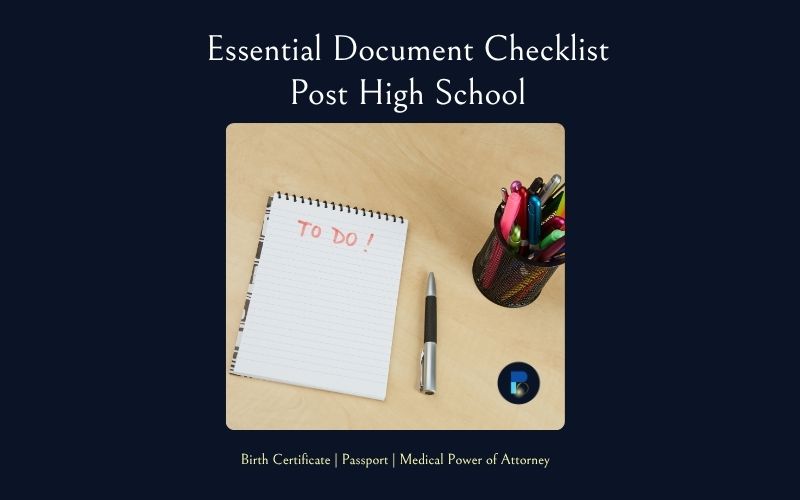
Keep copies at home. A shared digital folder that both you and your student can access is a smart backup to have.
Practical Tips for Families Right Now
Have the conversation early. Frame all of this as practical preparation, not a reason to panic. Most students, once they understand why these documents matter, are willing to get things in order before they go.
Respect the shift. Your student is stepping into adulthood. The paperwork and conversations that supports them through that transition works best when it is built on trust and open communication, not just checked off a list.
Trade school and gap year students face the same reality. FERPA applies to postsecondary enrollment at trade and technical schools too. According to the Imagine America Foundation, trade school enrollment is projected to grow 6.6% per year through 2030. More families than ever are navigating this exact transition, and the privacy and paperwork considerations are the same regardless of the path chosen.
Part of knowing what to do after the college decision is figuring out, as a family, how you will stay connected once your student leaves home. Some families do weekly phone check-ins. Others set up a shared digital folder where both parents and students can access important documents, emergency contacts, insurance cards, and school phone numbers. The setup does not need to be complicated, but it does need to exist before move-in or move-out day. If your student worked through some difficult admissions news before landing where they did, our post on helping your child through college rejection addresses the emotional side of this transition and may be worth revisiting now that the path forward is clear.
Do not wait until orientation week. Some of these documents, particularly the Healthcare Proxy, require a notary or witnesses depending on your state. Build in time to get them done properly before summer ends.
Planning Ahead
If you have other students at home who are earlier in the process, our education planning framework for parents is a practical starting point for thinking through what path makes sense for them. At BrightSpot Labs, we work directly with families to cut through the noise, listen for understanding, make sense of options, and build a plan that actually fits the student in front of you, whether that is a four-year college, a gap year, a trade program, or something in between.
Connect with BrightSpot Labs today and let us help you figure out what comes next.
The Part Nobody Really Talks About
Here is the thing about this transition that gets glossed over in all the excitement: your student is about to go through one of the largest identity shifts of their life, and most of them have no idea it is coming.
They know they are going to college. What they may not yet know is that who they have been for the past four years, the athlete, the theater kid, the one in the friend group who always drives, the older sibling, the person everyone just knows, is about to get completely scrambled. That is not a bad thing. But it is a real thing, and it is worth naming out loud before August arrives.
Let Them Grieve Leaving
Graduating high school means leaving behind friends, teachers, a town, a routine, and a version of themselves they have spent years building. Even students who are thrilled to leave still grieve this, whether they say so or not. Sometimes, that grief sets in during the fall semester or later. The friend group that feels unbreakable in May often looks very different by October. The town they could not wait to escape suddenly matters more than they expected. Let your student feel all of that without rushing them toward excitement they are not ready for yet.
Help Them Build a Social Plan, Not Just a Packing List
Every family spends hours on a packing list. Very few sit down and talk about how their student will actually meet people when they do not know anyone. That conversation is worth having specifically. Talk about the first two weeks: saying yes to hall events even when it feels awkward, eating in the dining hall instead of staying in the room, introducing themselves to a classmate before class begins or ends. Social confidence does not come naturally to everyone, and thinking through the approach before they go makes a real difference.
Be Honest About the Academic Adjustment
The student who graduated near the top of their class and rarely had to try can sometimes be the one who struggles most in the first semester. College moves faster. Professors do not chase students down for missing work. The safety net of parents and high school counselors disappears. Talk about office hours before they are desperate. Talk about tutoring centers and academic support services. Talk about the fact that needing help is not the same as failing, and that asking for it early is one of the smartest things a college student can do.

Have the Mental Health Conversation Before They Leave
Anxiety and depression spike significantly in the first semester of college at rates that still catch campuses off guard every fall. This is not a reason to be alarmed. It is a reason to have a real conversation before your student goes. Help them know where the counseling center is, how to make an appointment, and what to do if they are struggling and not sure who to tell. Frame it the same way you would talk about the health center or the dining plan. It is a resource that exists for them, and using it is an act of strength, self-care, and self-advocacy. All important practices and skills as they keep moving through their life.
Your Emotions Through This Are Real Too
Empty nest is a phrase that gets treated as a punchline. Movies are made about it. What it actually feels like is much harder to put into words. The daily rhythm of your life is about to shift in a significant way, and you might feel relief, pride, sadness, and fear all in the same afternoon. You do not have to perform excitement you are not feeling. Remember that and use it as a mantra when needed. And you do not have to hold it together completely in front of your student either. Letting them see that this matters to you is not weakness. It models the kind of emotional honesty that helps them ask for support when they need it at school.
Staying Connected Without Hovering
Students who struggle most in the first year often have one of two things going on: parents who are in contact constantly, or parents who gave full independence so abruptly that the student felt cut off. Neither extreme tends to helps. Before they leave, talk about what staying in touch will actually look like and understand that the plan might shift over time: how often, through what channel, and what the difference is between needing real support and just being homesick. Both are okay. Knowing the difference helps everyone navigate it without it becoming a conflict.
Between Now and August
This summer matters. Not because your student needs to accomplish more before college, but because it is the last stretch of time you have together as the family you have been. Be intentional with it.
A few things worth doing before they go:
- Have a real financial conversation beyond the tuition bill: a monthly budget, what the card is for, and which expenses you are and are not covering
- Practice a few life skills together: laundry, cooking a basic meal, making a doctor’s appointment, managing a bank account independently
- Ask them how they are actually feeling about leaving. Not in a probing way. Just open the door and see what comes out
- Let some of the summer just be summer. Not everything needs to be prep, and the downtime matters too
Disclaimer: The information provided by BrightSpot Labs is for general informational and educational purposes only. This post is not intended to serve as legal or medical advice. Families are encouraged to consult a qualified attorney in their state when considering legal documents such as a Healthcare Proxy, Medical Power of Attorney, or Durable Power of Attorney, as requirements vary by state. For health insurance or HIPAA-related questions, speak with your insurance provider or a qualified healthcare professional. Families navigating post-high school planning are encouraged to work with a qualified educational consultant or school counselor.