
By Antonietta Breitenfeldt, M. Ed. | BrightSpot Labs
May 1 is more than just a date on the calendar for high school seniors. It is National College Decision Day, the deadline by which most colleges and universities expect accepted students to confirm their enrollment and submit their deposit. For families who have spent months visiting campuses, reviewing financial aid packages, and weighing options, this deadline can feel like the finish line of a very long race.
But in many ways, it is just the beginning of a new set of questions.
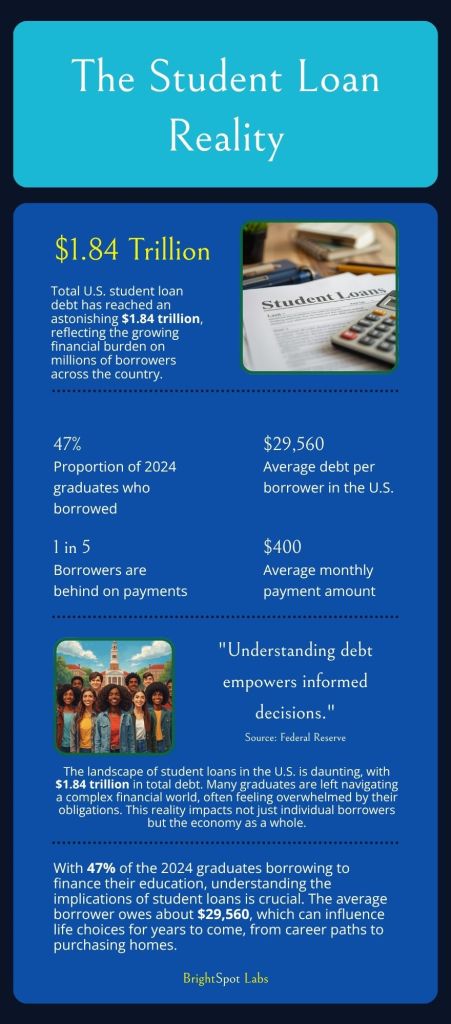
With total U.S. student loan debt now exceeding $1.84 trillion and the landscape of work shifting faster than it ever has before, the college decision is no longer a straightforward path. Families today are navigating a decision that is genuinely complex, with financial, personal, and professional dimensions that deserve real consideration before the deposit is sent.
This post is for families who want to make the best possible decision for their student, and for themselves.
What Is National College Decision Day?
National College Decision Day falls on May 1 each year. It is the standard enrollment deposit deadline recognized by the National Association for College Admission Counseling (NACAC). While some schools have their own earlier or later deadlines, May 1 is widely observed across most four-year colleges and universities.
For students, this means choosing one school from their acceptance list, submitting the enrollment deposit (typically between $100 and $500), and notifying schools they will not be attending. For families, it means committing to a financial plan that will shape the next four or more years.
The Financial Reality Families Are Facing
One of the most important conversations to have before May 1 is an honest one about money. Student loan debt in the United States now totals approximately $1.84 trillion across more than 42 million borrowers. According to recent federal data, 47% of the Class of 2024 who earned bachelor’s degrees from four-year public and private nonprofit colleges graduated with student loan debt, carrying an average of $29,560.
That number might not sound alarming in isolation. But when families factor in interest rates, repayment timelines, and the reality that roughly 24% of current borrowers with payments due are already behind, the picture becomes more complicated.
There are a few things worth understanding before committing to a financial plan:
- The type of institution matters. Public universities often carry significantly lower costs than private colleges. Community college followed by transfer to a four-year school can reduce debt substantially. Online and hybrid programs have expanded significantly and may offer comparable quality at lower cost.
- The major matters more than families often realize. Graduates in fields like computer science, engineering, and nursing tend to see strong returns on their investment. Some other fields carry a median return of less than 6%. That does not mean a student should never pursue a passion, but it is worth building an honest, open-eyed conversation around earning potential and debt repayment.
- Financial aid packages are not always equal. A school with a higher sticker price that offers strong grant aid may ultimately cost less than a school with lower tuition that offers mostly loans. Families should compare net cost, not listed tuition.
How the Changing Landscape of Work Complicates the Decision
One of the reasons college decisions feel so weighty right now is that the world students are entering is genuinely different from the one their parents navigated. A few trends are reshaping what the right choice looks like:
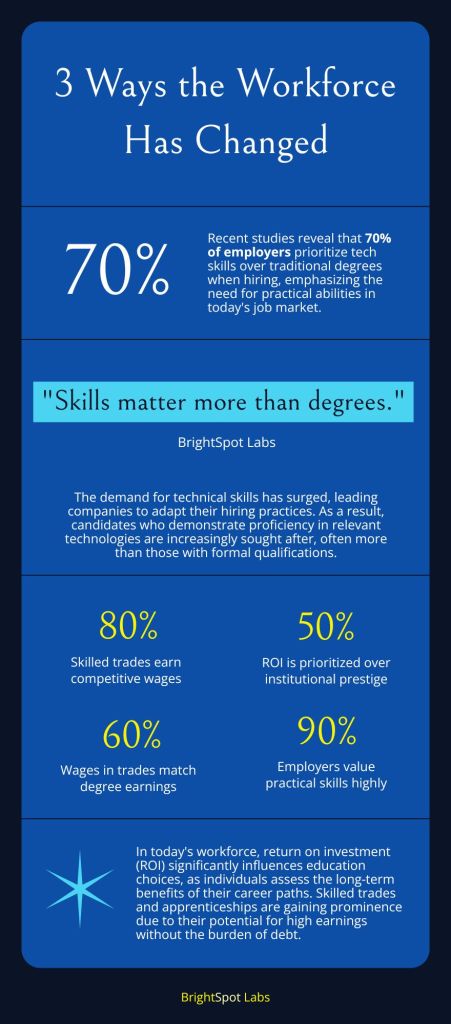
- Artificial intelligence and automation are changing what employers value most. Adaptability, critical thinking, ethical reasoning, and strong communication have become increasingly important across nearly every industry. The credential matters, but so does what a student can actually do with it.
- Trade and technical pathways are gaining serious traction. In 2019, 13% of parents said career and technical education was the best fit for their child. By recent surveys, that number has risen to 35%. Many skilled trades now offer six-figure earning potential with significantly less debt than a four-year degree.
- The four-year degree still holds value, but not universally. Research from the Federal Reserve shows a median 12.5% return on investment for college graduates overall. However, roughly a quarter of college graduates do not see a positive return. The gap often comes down to institution, major, and whether the student completes their degree.
None of this means that college is the wrong choice. For many students, it is absolutely the right one. But it does mean that the conversation should go deeper than prestige or proximity.
5 Tips for Making the Best College Decision as a Family
Making a college decision in the next few weeks does not have to feel chaotic. These strategies can help families approach it with more clarity.
1. Compare Net Cost, Not Listed Price
Request a detailed breakdown of each school’s financial aid offer. Look at grants and scholarships (money that does not need to be repaid) separately from loans. Use each school’s net price calculator if you have not already. The real cost of attendance is rarely the number on the brochure.
2. Have an Honest Family Conversation About Debt
Before May 1, talk openly as a family about what level of student loan debt is manageable. A common guideline is to borrow no more than your student’s expected first-year salary. Knowing this number in advance creates a shared framework for the decision and protects the whole family from financial surprises down the road.
3. Research Career Outcomes, Not Just Rankings
Look at graduate employment rates, average starting salaries by major, and alumni networks for each school your student is considering. These numbers tell a more meaningful story than a spot on a ranked list. Many schools publish this data on their websites or through the College Scorecard.
4. Consider the Full Four-Year Picture
Does the school have a strong advising structure? What are the graduation rates? What support exists for students who change their major or hit academic challenges? A school that looks appealing in year one needs to deliver through year four.
5. Bring in Outside Perspective
Advisors, mentors, coaches, and educators who know your child well can offer perspective that rankings and brochures cannot. Their insight into your student’s learning style, resilience, and goals can be genuinely clarifying, especially when your family feels torn between two strong options.
A Note on What “Best” Really Means
There is no single right answer when it comes to college decisions. The best fit for one student may be entirely wrong for another. A student who thrives on independence and has a clear career path may do beautifully at a large public university. A student who needs more structure and community may flourish at a smaller private school. One student’s ideal path may lead through a community college and transfer. Another may find their best opportunities at a trade or technical program.
What families are really asking is: where will my child have the support, the opportunity, and the foundation to build a life that works for them?
That question deserves more than a deposit deadline.
How BrightSpot Labs Can Help
At BrightSpot Labs, we work with families who are navigating the full spectrum of educational decisions, from early academic planning through college selection, application, financial aid review, and beyond. If you have a younger student who will be going through this process in the coming years, now is the time to start building a thoughtful, informed plan.
You do not have to figure this out alone, and your family should not have to.
We offer personalized education consulting that meets your student where they are and helps your whole family move forward with confidence. Schedule your free discovery call today and let us help you navigate what comes next.
Not sure where to start? BrightSpot Labs has compiled a library of free tools, guides, and frameworks to help your family navigate every stage of the college planning process. Visit our Resources page to explore what’s available and get a head start before May 1.
Frequently Asked Questions
What is National College Decision Day and why does May 1 matter?
May 1 is the standard enrollment deposit deadline recognized by the National Association for College Admission Counseling. It is the date by which accepted students must commit to one school and submit their deposit. Missing it risks losing the spot and any financial aid tied to it. Most schools also expect decline notices from students who will not be enrolling.
What should families compare when evaluating college acceptance letters?
Compare net cost, not sticker price. That means looking at grants and scholarships (money that does not need to be repaid) separately from loans, and using each school’s net price calculator to see what your family would actually pay. Then look at graduation rates, career placement outcomes, and alumni networks. A higher ranking does not automatically mean a better financial or academic fit.
How much student loan debt is reasonable for a college student to take on?
A commonly cited guideline is to borrow no more than your student’s expected first-year salary in their chosen field. So if a student expects to earn $45,000 in their first year out of school, total borrowing should ideally stay at or below that number. Exceeding it can create monthly repayment pressure that stretches well beyond a decade.
Does where a student goes to college matter more than what they study?
Both matter, but research from Georgetown’s Center on Education and the Workforce shows that the combination of school, major, and access to career support has more bearing on outcomes than name recognition alone. ROI varies significantly even within the same major, which means the school choice matters but not always in the way families expect.
What questions should families ask before committing to a college by May 1?
Ask about net cost after all aid, graduation rates, career placement in your student’s area of interest, and what academic support looks like if plans change. Then ask: what will monthly loan payments look like at repayment, and is this school a genuine fit for who your student actually is right now, not just who you hope they will become?
Disclaimer: The information provided by BrightSpot Labs is for general informational and educational purposes only. Results discussed or referenced in this content vary by student, family, and individual circumstances. Any examples, scenarios, or outcomes mentioned are illustrative only and are not a guarantee of any specific result. BrightSpot Labs does not provide legal, financial, or therapeutic advice. All education planning decisions should be made in consideration of your child’s unique needs and circumstances. BrightSpot Labs is not responsible for outcomes resulting from strategies, advice, or information discussed in this content.